Microsoft 365 Azure price increase India 2027: what to lock in
Microsoft cloud prices in INR rise 15.7% on 1 January 2027. Lock in current rates and trim waste before renewal to protect your FY2027 budget.
BlogBy ITCG Team

Microsoft has confirmed an annual currency adjustment that raises Commercial Cloud prices in India by 15.7% from 1 January 2027, with some on-premises offerings rising up to 20% (Computerworld). This Microsoft 365 Azure price increase India 2027 affects your Microsoft 365 seats, Azure workloads and other commercial cloud offerings. This article is for Indian IT managers and CFOs who run these services at scale and need a clear, time bound plan before the deadline.
What is changing and when
Microsoft is applying an annual currency adjustment that lifts INR prices on its Commercial Cloud by 15.7% from 1 January 2027 (Computerworld). This covers Microsoft 365, Azure and other commercial cloud offerings sold in rupees. The change is confirmed, so you have a firm date to plan against.
There is also a separate global Microsoft 365 list change that took effect on 1 July 2026, with local market adjustments where relevant. Existing customers could lock in current pricing by renewing or upgrading before that date, and the new prices apply at the next renewal after 1 July 2026 (Microsoft). Read the two together: the July 2026 list change and the January 2027 currency adjustment both push your INR bill up.
The 15.7% currency adjustment
The 15.7% figure is a currency adjustment, not a new feature or a change in your seat count. It reflects the rupee against the US dollar in which Microsoft sets global list prices.
On-premises up to 20%
Some on-premises offerings rise by up to 20% (Computerworld). If you still run on-premises Microsoft licences alongside cloud, factor that higher band into your FY2027 numbers.
Why your INR bill rises even with no new users
The adjustment is a currency mechanism. Microsoft sets list prices globally, and when the rupee moves against the dollar, it periodically resets INR prices to match. So your bill can rise even if you add no users and change no plans.
This matters for budgeting. The adjustment is described as annual, which means you should plan for recurring changes rather than treating this as a one-off (Computerworld). Build a contingency for currency-linked pricing into your forecasts each year.
For context, Microsoft has raised global prices on core Microsoft 365 enterprise SKUs by as much as 25% since 2021, and further increases are forecast as AI functionality expands (CloudNuro). Treat currency adjustment as a standing line item, not a surprise.
Which workloads are most exposed
The workloads that feel the increase most are the ones where your spend is largest or growing fastest. Prioritise your review in this order:
- Microsoft 365 seats at scale, where a 15.7% rise multiplies across thousands of licences.
- Data and analytics platforms, where consumption is steady and high.
- Azure-based AI workloads, which are often the fastest-growing part of the bill (Computerworld).
Azure is widely used, with almost 38% of organisations worldwide on the platform as of 2025, and its portfolio now includes more than 5,379 AI and ML services (Statista). The AI side of Azure is where new spend tends to concentrate, so watch it closely. For sizing and plan choices, see our guide on choosing the right Microsoft 365 plan.
How to lock in current rates before January
The core action is simple: renew or sign a multi-year agreement before your next renewal so you hold current pricing for the term. Customers on existing multi-year commitments continue at their current rates until renewal (Microsoft). That makes early action the practical way to delay the higher rates.
Early renewal and multi-year commitment
- Review your current agreement and renewal date now, not in December.
- Where it fits, commit multi-year to secure price protection for the full term.
- Push for price-protection terms in your enterprise agreement before the deadline (Computerworld).
Annual vs monthly billing
- Both annual and monthly plans are affected at the next renewal, so neither escapes the change (Microsoft).
- Annual or multi-year commitments give price protection and operational clarity.
- Monthly billing offers flexibility but exposes you to increases at each renewal or contract change (CloudNuro).
ITCG is a Microsoft Partner. Our team can review your current agreement, model a multi-year lock-in against your next renewal date and handle the paperwork in INR before 1 January 2027. Talk to an engineer at ITCG about locking in your rates.
Cut waste before you renew
Every rupee of waste you remove is a rupee you will not pay the 15.7% on. Trim the base first, then renew on a leaner footing.
Right-size seats and licenses
- Remove unused Microsoft 365 seats before renewal.
- Downgrade over-provisioned E5 licences where the features are not used (Computerworld).
- Tidy auto-renewals and redundant licensing. Licence right-sizing and SaaS management before renewal can drive 10 to 35% in savings (CloudNuro).
For a deeper walkthrough, read how to cut Microsoft 365 licensing costs without losing features.
Reserved instances and savings plans
- Right-size idle Azure resources before you commit (Computerworld).
- Move steady workloads to reserved instances or savings plans.
- Place new workloads where the economics work best.
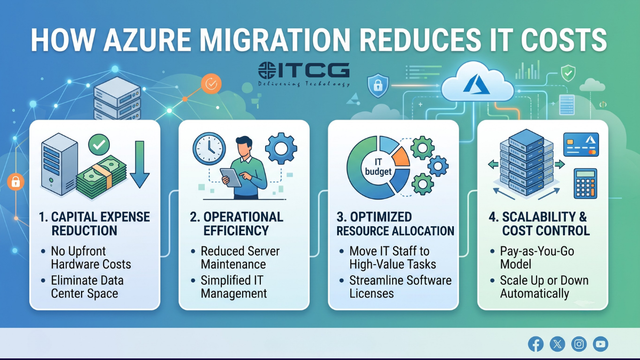
If you plan to shift workloads, our note on how Azure migration reduces IT costs is a useful starting point.
ITCG's License Software & Infrastructure team can right-size your Microsoft 365 seats and Azure resources, so you renew on a leaner base. Get a free consultation on trimming waste before you commit.
What to check in real Indian renewals
This is guidance we give Indian buyers when a renewal lands near a price change. Work through these checks before you sign.
GST invoicing and input tax credit
- Direct billing in INR with GST-compliant invoices is critical to recover input tax credit.
- Non-compliant invoices or some reseller purchases can forfeit these benefits and raise your effective SaaS spend (CloudNuro).
- Check that every renewal invoice carries your correct GSTIN and billing entity.
Auto-renewal and price protection clauses
- We often see auto-renewals quietly roll over without oversight, which locks in new rates by default.
- Plan your rollout order across branch offices so the largest seat counts renew under protected terms first.
- Ask for written price-protection clauses and confirm the dates they cover.
Public sector procurement notes
If you buy for a government department, the rules differ from commercial buyers.
- MeitY's cloud selection framework states that procurement of cloud services shall follow the General Financial Rules, 2017, with States free to follow their own procurement rules (MeitY).
- A rate-contracting route exists in which Digital India Corporation has discovered hyperscaler cloud rates through competitive tenders, with periodic re-evaluation, published at dic.gov.in (MeitY).
- MeitY's Guidelines for Procurement of Cloud Services (v2.2) move pricing from a fixed-price model toward a pay-as-you-go utility model (MeitY).
When you set your FY2027 numbers, treat the currency adjustment as a known line. For a structured approach, see how to build your IT budget for FY2027.
How ITCG can help
ITCG is a Microsoft Gold Partner that sells, deploys and supports licensing and cloud for businesses across India. Our License Software & Infrastructure and Cloud Services teams can review your agreement, model early renewal and multi-year options, right-size seats and Azure resources, and help with GST-compliant INR invoicing so you protect input tax credit. With 32+ years in business and 5,000+ clients served across India, we handle the detail so you renew with confidence. Get a quote for your renewal.
Frequently asked questions
How much are Microsoft cloud prices rising in India?
Microsoft confirmed an annual currency adjustment raising Commercial Cloud prices in INR by 15.7%, effective 1 January 2027, with some on-premises offerings rising up to 20% (Computerworld). This applies to Microsoft 365, Azure and other commercial cloud offerings in India.
Can I lock in current Microsoft 365 pricing before the increase?
Yes. Renewing or signing a multi-year agreement before your next renewal secures current pricing for the term, as customers on existing multi-year commitments continue at their current rates until renewal (Microsoft). Both annual and monthly plans are affected at the next renewal, so acting early is the effective way to delay the higher rates.
Does early renewal help with both annual and monthly plans?
Both annual and monthly billing are affected by the new pricing at the next renewal. Annual or multi-year commitments give price protection and operational clarity, while monthly billing offers flexibility but exposes you to increases at each renewal or contract change (CloudNuro).
How can I reduce the impact of the price hike?
Remove unused Microsoft 365 seats, downgrade unnecessary E5 licences and right-size idle Azure resources before you renew, so you pay the higher rate on a smaller base. Moving steady workloads to reserved instances or savings plans and tidying auto-renewals can save 10 to 35% and offset part of the increase (CloudNuro).
Why does GST-compliant INR invoicing matter here?
For Indian enterprises, direct billing in INR with GST-compliant invoices is critical to recover input tax credit. Non-compliant invoices or some reseller purchases can forfeit these benefits and raise your effective SaaS spend (CloudNuro).
To protect your FY2027 budget before the deadline, get a quote for your renewal with ITCG.