
Indian Manufacturers Move CAD Workflows to the Cloud in 2026
See how cloud-based CAD boosts security, speeds design, and drives growth.
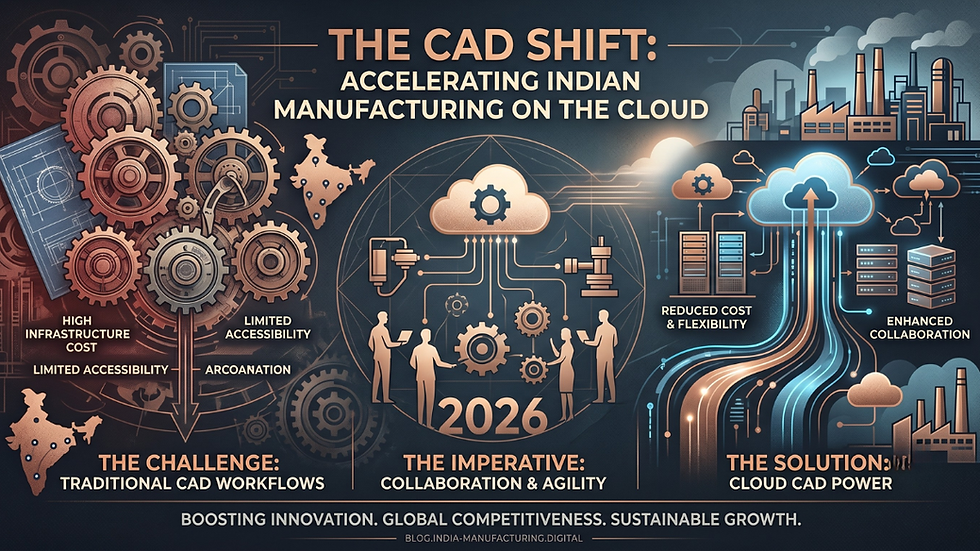
Manufacturing in India is rapidly embracing online design and collaboration tools. Rising production volumes, a demand for faster collaboration, and the need to safeguard sensitive intellectual property have drawn strong attention toward cloud computing for CAD (Computer-Aided Design). This shift means more than just uploading files. Instead, it unlocks capabilities like real-time 3D modeling, integrated simulation, and centralized project oversight across global teams.
Below is an exploration of why Indian manufacturing companies are moving their CAD workflows to the cloud in 2026, what advantages they gain, and how a timely transition can set them up for success.
Why Cloud CAD Is Booming
According to this CADDrafter article on CAD drafting trends, more than 35% of designers worldwide already rely on cloud-based platforms to collaborate on complex 3D models. India is catching up quickly. With robust data networks in major industrial zones and the urgent need for remote design, cloud-based CAD is no longer optional, it's a strong differentiator.
Streamlined Collaboration: Many Indian enterprises have designers, engineers, and suppliers in different locations. Cloud platforms let them connect in real time and track version changes automatically. Team members avoid emailing bulky files or dealing with conflicting software versions. The result is fewer errors and faster design approvals.
Reduced Overheads. Traditional on-premises CAD workflows require powerful hardware and constant software updates. By shifting to cloud subscriptions, organizations spread costs monthly or yearly. This approach keeps them current on features without hefty upgrades. An example is Encycam’s analysis of 2025-2026 CAD/CAM trends, which confirms the success of AI-driven, subscription-based CAD solutions worldwide.
Better Security: Protecting sensitive product designs and preventing data breaches have become business-critical goals. While older CAD systems rely on local servers that are prone to unauthorized access, modern cloud solutions maintain enterprise-grade security. Multifactor authentication, user-specific permission levels, and encryption help ensure that designs remain confidential, a vital requirement for industries like automotive, aerospace, and defense.
Real-Time Simulation & Analysis Cloud-based CAD platforms frequently integrate with simulation tools. Complex stress tests, fluid dynamics, and thermal analyses can run in the same shared environment. Designers get immediate results and can refine models faster. This level of digital testing saves on multiple prototypes and reduces development cycles, which is particularly appealing as India invests in EV, aerospace, and precision engineering.
Trends Shaping Indian CAD Adoption
Recent coverage by The Economic Times on Indian factories digitizing highlights a surge in adopting connected technologies, from digital twins to AI-powered production lines. Indian manufacturers are merging CAD data with manufacturing resource planning (MRP) and the Industrial Internet of Things (IIoT). By doing so, they bridge design, supply chain, and production floors, enabling quick feedback loops and efficient design iteration.
At the same time, 5G rollouts and widespread broadband connectivity are increasing the reliability of cloud access. With near-uninterrupted connectivity, engineers can handle sophisticated 3D assemblies on a laptop from almost anywhere.
Overcoming Concerns
Some enterprises worry about data residency or compliance with local laws, yet top providers offer region-specific data centers to address these issues. Others worry about user training. However, many frameworks, like PTC Onshape or Autodesk Fusion 360, provide intuitive interfaces that are simpler for new hires to learn than traditional desktop-bound systems.
A thorough approach, combining workforce readiness, robust security protocols, and integrated cloud licensing, eliminates most obstacles. The result is a highly responsive design ecosystem that centralizes all major tasks online.
Partnering for a Secure Journey
For manufacturers interested in making the move, it helps to have technical support that understands both cloud integration and advanced CAD workflows. That includes selecting the right licensing plan, managing data migration, and training teams on new design processes.
ITCG Solutions Pvt. Ltd. is one partner that offers a customized approach. They provide CAD services with an eye toward real-time collaboration, security, and system optimization. Their experience in software licensing, managed infrastructure, and cybersecurity can help manufacturers transition smoothly, leaving teams free to focus on strategic product design rather than hardware upkeep.
Ready to Gain from Cloud-Based CAD?
Whether your organization aims to build smart cars, medical devices, or next-generation industrial components, cloud-based CAD solutions can drastically reduce development timelines while enhancing data security. Indian manufacturers that adopt online platforms soon gain a speed and quality advantage over their competitors. For a robust rollout, covering specialized software, reliable data backups, or advanced workflow consultation, teaming up with an experienced provider can fast-track the benefits.
Now is a good time to review your existing design process and move toward a cloud environment that suits your needs. If you’d like to explore modern CAD strategies, licensing approaches, and secure deployments, connect with ITCG Solutions Pvt. Ltd.. Their experts can offer guidance on designing an end-to-end solution that’s built for agility and growth.
Embrace the power of cloud-based CAD now, and stay one step ahead of the competition through 2026 and beyond.


Comments